
The Short Answer
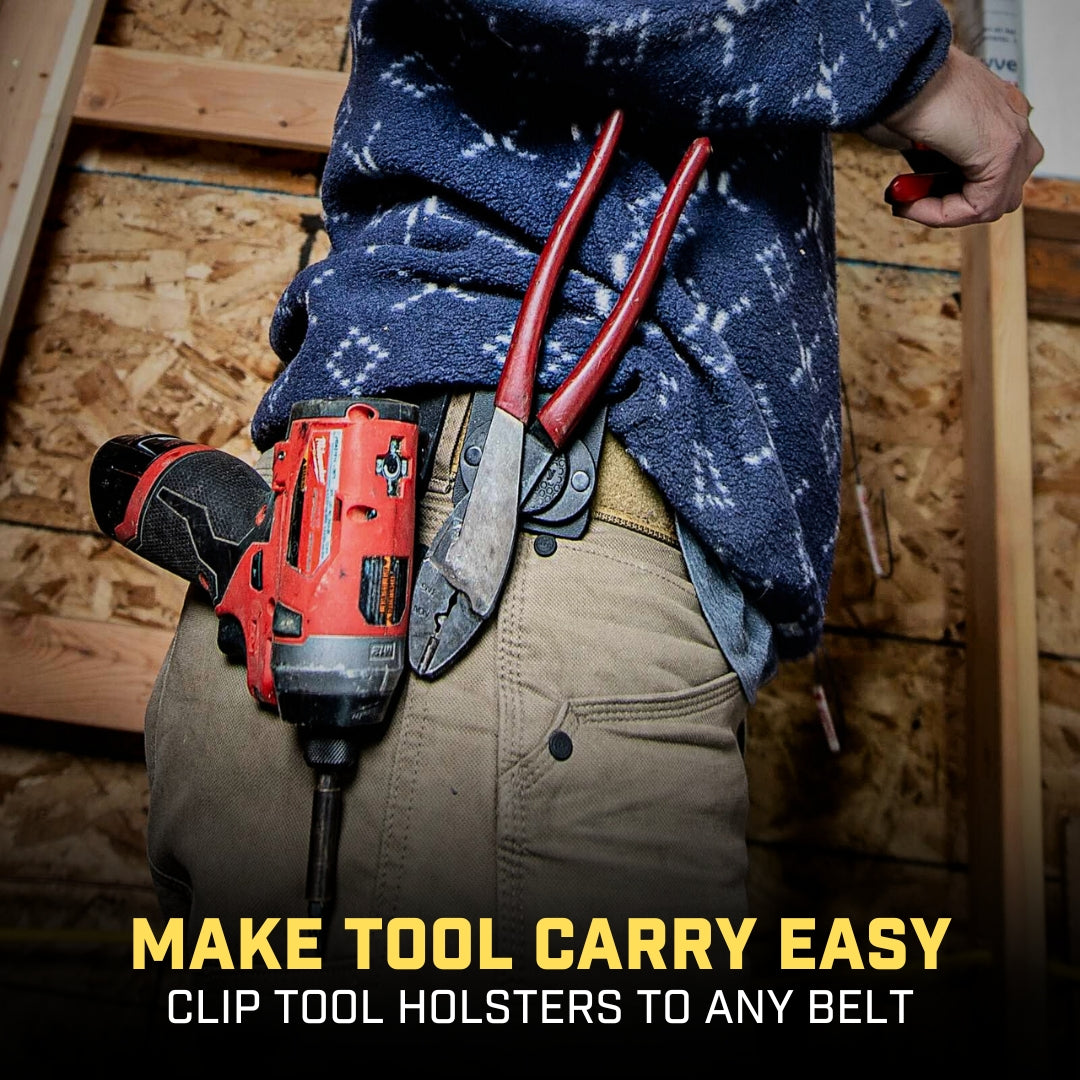
Most DIY projects only need three holsters on your belt: a tape measure holster, a drill holster, and a small pouch for screws, bits, a pencil, and a knife. That covers the five tools weekend warriors actually reach for, without a bulky contractor rig.
The easiest way to get there is the Holstery Starter Kit: a Joey Pouch, a DriverMaster drill holster, a MagMaster for screws and bits, and a pen loop, all clipping onto the belt you already wear. Add a TapeMaster and you're set for almost any weekend project.
Jump to a section
In This Guide
Why Most DIY Tool Belts Don't Work
When it comes to DIY projects, the best tool belt isn't the biggest one on the shelf. It's the one that fits your project. Every weekend warrior knows the problem: one Saturday you've got too many empty pockets, the next you're juggling tools because you ran out of space.
Why people buy a traditional tool belt anyway:
- Lots of pockets, so it feels ready for anything.
- Nothing to set up. Buy it and go.
- Big capacity for a deck or shed weekend.
Where it falls short for DIY:
- Fixed layout. DIY work changes every weekend, and a fixed belt doesn't.
- Too much belt. Most home projects use a handful of tools.
- It lives on a hook. A bulky belt is a hassle to put on, so your tools end up in your pockets.
That's why the smartest DIY setup is one you design yourself. Start with only the tools you actually use.
The 5 Tools Every Weekend Warrior Actually Uses
For most DIY projects, speed comes from access, not quantity. These five essentials cover most weekend tasks without weighing you down.
1. Tape measure
No DIY tool belt is complete without fast access to a tape. From framing to furniture assembly, constant measuring means constant reaching. Keeping it on your belt saves time and frustration.
2. Driver bits and screws
Loose screws in your pockets slow everything down. A compact pouch or magnet for fasteners and bits keeps you moving and stops hardware from going missing mid-project.
3. Drill or impact driver
Most DIY work is driving screws. Having your driver within reach, without a full contractor belt, keeps your workflow smooth.
4. Pencil or marker
Marking cuts, layouts, and measurements happens constantly. Easy access matters more than most people realize.
5. Utility knife or small hand tool
Trimming material, opening packaging, or making a quick adjustment: a small blade or hand tool rounds out a practical DIY setup.
That's it. No oversized loops, no unused pouches, just the tools that get used.
The Top 3 Holsters You Actually Need
Here's how those five tools fit into three holsters on your belt.
1. A tape measure holster: TapeMaster
The TapeMaster keeps your tape in the same spot every time you reach for it, so you're not patting your pockets between cuts. It clips onto any belt up to 1.75" wide.
2. A drill holster: DriverMaster or PinPal
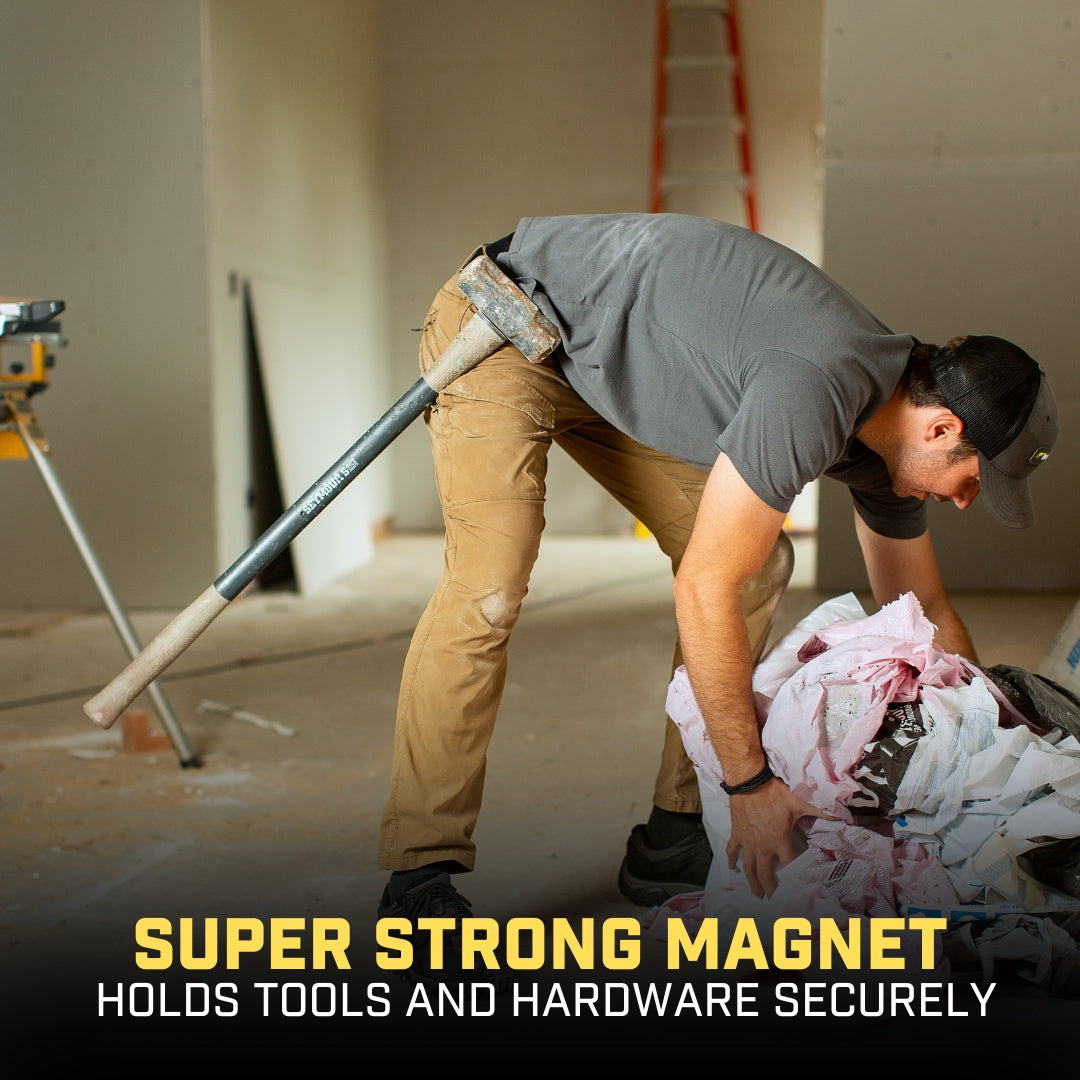
A drill holster means your driver rides on your hip instead of the top of the ladder. The DriverMaster comes in the Starter Kit. If you work up high a lot, the PinPal uses a gravity locking pin to hold your drill until you pull it out. One buyer summed up the problem it solves: "Climbing up and down a ladder because you dropped your drill or impact is quite annoying." (Christopher R.)
3. A small pouch and magnet: Joey Pouch and MagMaster
The Joey Pouch holds screws, a pencil, and a knife, and its cinch top keeps everything inside when you bend over. Add a MagMaster, an N52 magnet rated to hold 5+ lbs, for the bits and screws you're using right now.

Get most of it in one box. See the Starter Kit →
Why a Modular Tool Belt Beats a Traditional Tool Belt
Most DIYers don't need a $200 tool belt built for full-time trades. What they need is flexibility.
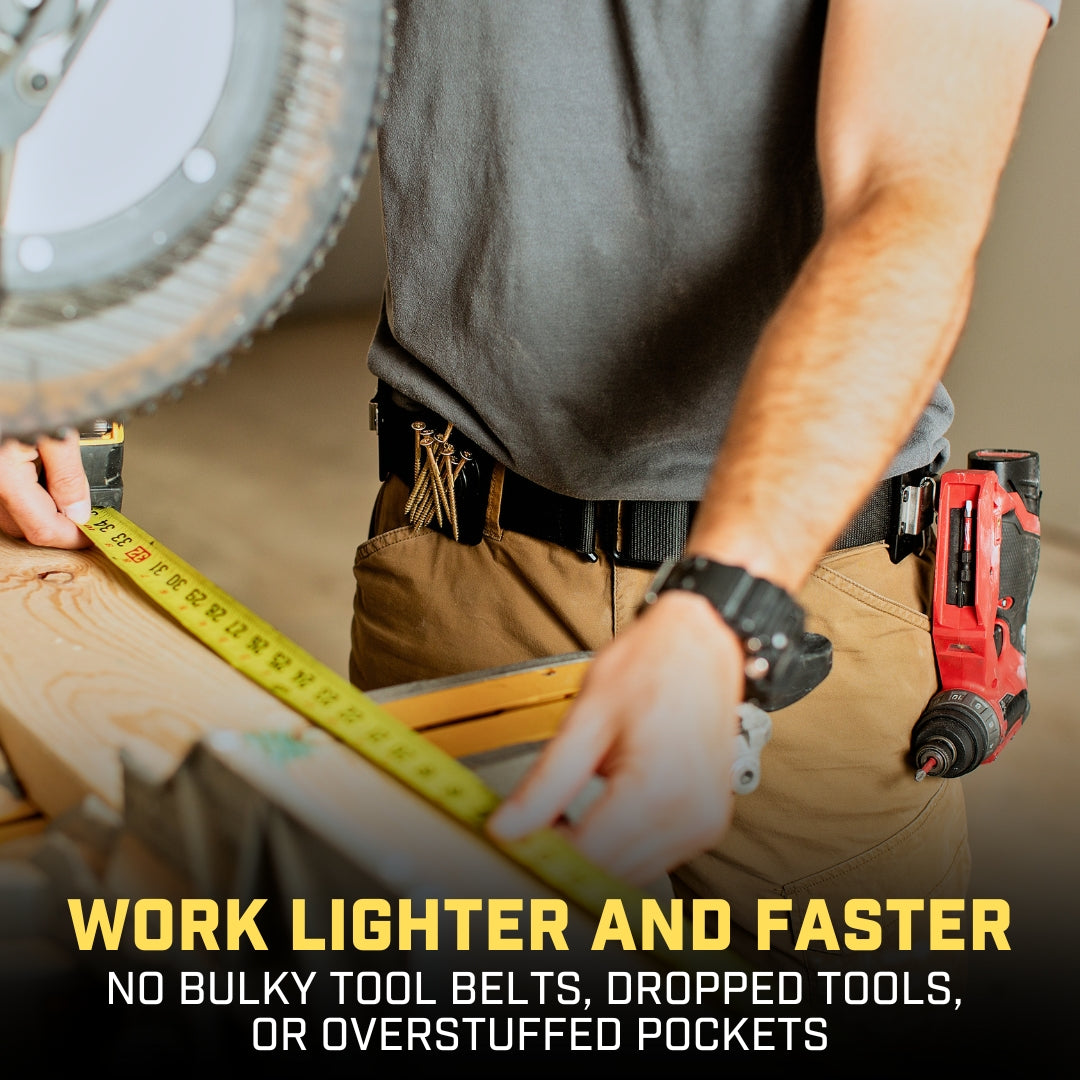
A modular setup turns almost any belt, even your everyday jeans belt, into a functional DIY tool belt. Add only what this project needs, then take it off for the next one. Fewer tools mean less weight, better mobility, and faster work.
Pockets vs. Traditional Tool Belt vs. Modular Holsters
| Your Pockets | Traditional Tool Belt | Holstery on Your Belt | |
|---|---|---|---|
| Fits your project | Barely | Fixed layout | Clip on what you need |
| Holds a drill | No | Sometimes | Yes, DriverMaster or PinPal |
| Keeps screws from spilling | No | Open bags can spill | Cinch-top Joey Pouch, MagMaster |
| Bulk | None | Bulky | Slim |
| Works on your jeans belt | N/A | No | Yes, any belt up to 1.75" |
| Warranty | N/A | Varies | Lifetime repair or replace |
| Cost to start | Free | Cheap to premium | Starter Kit, $99 |
Build Your Weekend Setup
Start with these and add pieces as your projects grow.
TapeMaster
Holster #1: your tape in the same spot every time you reach for it.
Shop now →DriverMaster
Holster #2: a clip-on drill holster so your driver rides on your hip.
Shop now →Joey Pouch
Holster #3: a cinch-top pouch for screws, a pencil, and a knife.
Shop now →MagMaster
An N52 magnet that keeps the bits and screws you're using in sight.
Shop now →PinPal
A gravity locking drill holster for ladder work.
Shop now →Big Joey Pouch
More room for deck, fence, and shed weekends.
Shop now →Jolly Roger
An angled hammer holster for bigger weekend builds.
Shop now →ModBelt
A 7.8 oz everyday belt that holds holsters without sagging.
Shop now →Three weekend setups
- Honey-do list: Joey Pouch, MagMaster, and TapeMaster.
- Shelves, TVs, and fixtures: Joey Pouch, MagMaster, TapeMaster, and a DriverMaster.
- Deck or fence weekend: Big Joey Pouch, PinPal, TapeMaster, and a Jolly Roger for your hammer.
Which Setup Should You Choose?
If you're upgrading from your pockets... get the Starter Kit and clip it onto the belt you already wear.
If you measure constantly... add a TapeMaster.
If you're on a ladder a lot... swap in a PinPal so your drill stays locked in.
If you do one big project a year... a cheap traditional belt will get you through. For everything else, modular is lighter and simpler.
If you want a dedicated DIY belt... the 7.8 oz ModBelt works as an everyday belt and holds holsters without sagging.
Our Pick: Holstery Starter Kit

Starter Kit
A Joey Pouch, DriverMaster drill holster, MagMaster, and pen loop that clip onto the belt you already own. Upgrade from your pockets without buying a full tool belt.
- Assembled in USA
- Lifetime repair or replace guarantee
- 45-day money back
- Free USA shipping over $99
$99
Shop the Starter Kit →Buying a gift? See the Tool Carry Kit with a TapeMaster →
Common Concerns
"A tool belt is overkill for DIY."
A big framing rig is. Three holsters on the belt you're already wearing isn't.
"Will holsters fit my regular belt?"
Yes, if it's 1.75" wide or less. That covers many jeans and work belts.
"My regular belt sags with a drill on it."
Many dress belts do. If yours does, the ModBelt's double-layer mil-spec nylon strap is built to stay stiff under tool weight.
"It costs more than a hardware store belt."
You only buy what you'll use, and every Holstery product comes with a lifetime repair or replace guarantee and a 45-day money back return.
FAQ
What tools should a DIYer keep on their belt?
A tape measure, a drill or impact driver, screws and bits, a pencil, and a utility knife cover most weekend projects.
What are the best tool holsters for DIY?
A tape measure holster like the TapeMaster, a drill holster like the DriverMaster or PinPal, and a small pouch like the Joey Pouch.
Do I need a tool belt for DIY projects?
Not a full one. A few clip-on holsters on your everyday belt cover most home projects.
What's in the Holstery Starter Kit?
A Joey Pouch, DriverMaster drill holster, MagMaster, and pen loop that clip onto the belt you already own.
What's the warranty?
Every Holstery product comes with a lifetime repair or replace guarantee, a 45-day money back return, and free USA shipping over $99.
Less Time on the Ladder, More Time With the CanMaster
DIY is about getting things done, not spending all weekend doing them. An efficient tool belt setup keeps your tools where you need them, cuts wasted motion, and helps you finish faster. That means more time off the ladder, more time away from the garage, and more time enjoying the results (cold drink in a magnetic CanMaster optional).
Start small. Build smart. Use only what you need, when you need it. That's how weekend warriors work smarter, not harder.


